How the MLB wants to turn Brazil into its next big baseball market
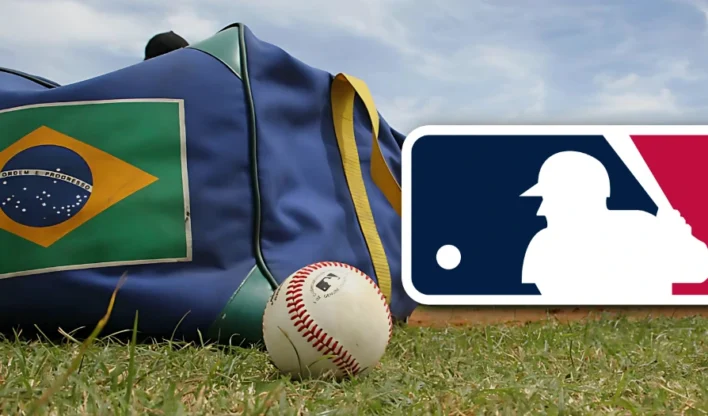
Investing and developing a new sport in a scenario where the sports culture is aggressively dominated by a single sport, soccer, is a complex task. It requires long-term planning, guided by small goals that give visibility to the process. It is exactly down this path that Major League Baseball (MLB) plans to pave the road that connects the US to Brazil through baseball.
To Times Brasil – Exclusive Licensee CNBC, Jeremiah Yolkut, Senior Vice President of Global Events for MLB, Rebecca Sessel, Vice President of International Operations for the league, and Pedro Rego Monteiro, CEO of Effect Sport—the partner agency responsible for this movement—detailed the strategy to develop a solid foundation in the country, in a plan that involves education, values, and the discovery of young promises in Latin America.
Modern baseball took shape in the 19th century in the United States, a country that in this year of 2026 celebrates its 250 years of independence. Since then, the sport has undergone profound transformations. The National League and the American League coexisted independently for nearly a century, until formal administrative unification under the MLB umbrella in 2000.
According to data from Heavy.com, in 2024 MLB generated a record 11.6 billion dollars in revenue, firmly positioning itself among the most influential leagues in the world. To reinforce the league's success, Shohei Ohtani, who has the largest salary in league history ($700 million), is the active athlete with the highest off-field earnings since Conor McGregor (UFC), recorded in 2021 by Forbes.
On Brazilian soil, the first records date back to the early 20th century with American engineers, but it was with Japanese immigration that the sport put down deep roots, with the municipality of Ibiúna, in the interior of São Paulo, as its great modern temple.
Before becoming a niche sport, baseball occupied the most noble showcase of São Paulo sports. In the 1910s and 1920s, the old Parque Antarctica — which would be bought and renamed Estádio Palestra Itália in 1920 — was the great stage for sports in the capital. It was there that employees of American companies, such as Light, played regular matches of the sport, attracting public curiosity.
The curatorship of Sociedade Esportiva Palmeiras shared excerpts from a note about the match in which the Palestra team (formed by elements of British/American descent) faced a Japanese team in 1928.
This historic field served as a cultural bridge. It was by watching and joining the teams formed by Americans at Palestra Itália that pioneers of the Japanese colony began to practice the sport in an organized way in the capital. Baseball, therefore, shared its birthplace with the very growth of the major São Paulo clubs.
Since the announcement of the league's investment in the country in 2026, with direct operations at the Ibiúna Training Center, MLB views the national market through the lens of a global investment portfolio strategy. Executives in New York are targeting long-term consumer potential. Jeremiah Yolkut explains the business thesis behind the investment:
“Our approach to international growth follows a ‘portfolio’ strategy. Parts of the portfolio are also places where baseball is not yet popular, but where the market opportunity is large and attractive, and where local conditions give us a strong thesis that long-term investments can lead to significant returns in engagement and revenue. Brazil and India are great examples of this.”
Yolkut points out that the country's macroeconomic moment is the main catalyst for sustaining this expansion:
“The first and most important factor is the continuous economic growth of the country. More families moving to the middle class, looking for more entertainment options beyond what is traditionally available, more disposable income to spend on buying a baseball cap.”
This audience building has a curious ally in streetwear. Thousands of Brazilians wear caps and apparel with the brands of American franchises on a daily basis, notably the New York Yankees, associating the symbol with New York City. The league's strategy involves capitalizing on this aesthetic appeal.
“There are tons of people in Brazil right now wearing a Yankees cap because they associate it with New York. We want to convert that love for American iconography into a similar love for our sport,” Yolkut projects.
Since the 90s, heavily fueled by hip-hop culture and streetwear, the cultural clash between the East Coast and the West Coast of the US has also been present at the top of licensed baseball merchandise sales. According to the official MLB website, the Los Angeles Dodgers — the reigning league champions — lead the ranking of best-selling jerseys, driven by the Shohei Ohtani phenomenon in first place, followed closely by jerseys of pitcher Yoshinobu Yamamoto and Yankees star Aaron Judge. In the case of the New York franchise, it is clear that even after going through the Wild Card and falling in the Division Series to the Blue Jays — finalists that season —, the iconic 'NY' brand sells itself.
From Made in USA to Made in Brazil: bringing the project into green and yellow
Consolidating the structure of the world's largest baseball league in Brazil required more than financial investments; it demanded a “cultural translator” capable of understanding the nuances of the advertising market and the local audience. Effect Sport took over this brand transition operation in the country, and Pedro Rego Monteiro (CEO of the agency) highlights the responsibility of the project:
“Supporting the growth of a property like MLB in Brazil means taking on the role of cultural translator. It's not enough to simply import the American product; we need to build a bridge between the stories and formats that already work here and the essence of baseball. From a management and governance standpoint, this comes with real responsibility. We have become guardians of the MLB brand in the Brazilian market.”
The main operational challenge is the barrier of unfamiliarity, as baseball still faces low familiarity among the general public regarding its rules. However, for the partner agency, the fact that most people do not yet know the rules or the teams is the ideal scenario to build something new and engage an audience that is interested in the American sports ecosystem.
In this phase of the project on national soil, the strategy does not involve hosting immediate official games, but rather creating continuous points of contact with the public. The planning outlines a progression that begins with watch parties and fan experiences during the most important moments of the season, such as the All-Star Game and the World Series, to build a solid consumer base before taking bigger steps.
The talent factory and social impact
At the heart of this operational gear is the Ibiúna Training Center, whose strategic location leverages the demographic and cultural intelligence of São Paulo. The region is home to the largest population of Japanese descent outside of Japan and a growing Venezuelan community, groups that already have a natural affinity for the game.
The strategy designed by the league works as an investment funnel: by injecting resources into grassroots development and youth training, MLB creates a cycle of sustainability where individual athletic success acts as the main driver for attracting new consumers. Rebecca Sessel details that this integrated approach seeks to create a two-way street for the sport in the country:
“We take a holistic approach that focuses both on the Ibiúna academy as a hub for developing elite talent that can transition to the Major Leagues in the United States, and on growing baseball overall at the youth participation level throughout the country. We believe these two goals go hand in hand: elite players training in Ibiúna and pursuing successful careers motivate more young Brazilians to play baseball.”
Ultimately, the main goal of this long-term funnel is to find a global Brazilian idol, following the example of Shohei Ohtani in Japan or Fernando Valenzuela in Mexico, utilizing the youth sports ecosystem that Brazil offers to reveal this first crop of national stars.
Pedro Rego Monteiro concludes by pointing to the strong vector of transformation that this structure represents for the lives of the young athletes in Ibiúna, offering a foundation of development that goes far beyond the field lines and justifies the social value of the investment:
“A boy selected for Ibiúna receives housing, schooling, meals, English classes, psychological support, a complete foundation, in addition to world-class athletic development. Even for those who never make it to MLB, it is a life-changing opportunity for their families."
KEY POINTS
MLB views the national market through the lens of a global investment portfolio strategy.
At the heart of this operational gear is the Ibiúna Training Center; the region is home to the largest population of Japanese descent outside of Japan.
The strategy designed by the league works as an investment funnel: by injecting resources into grassroots development and youth training.
Source:
https://timesbrasil.com.br/esportes/como-a-mlb-quer-transformar-o-brasil-em-seu-proximo-grande-mercado-de-beisebol/